

Hello folks.
A lot is happening this week that sits at the heart of what SEG3 covers — from the nominees for The Game Awards to the GTA 6 launch. So it’s a perfect moment to remind you that we’re only three weeks out from SEG3 LA!
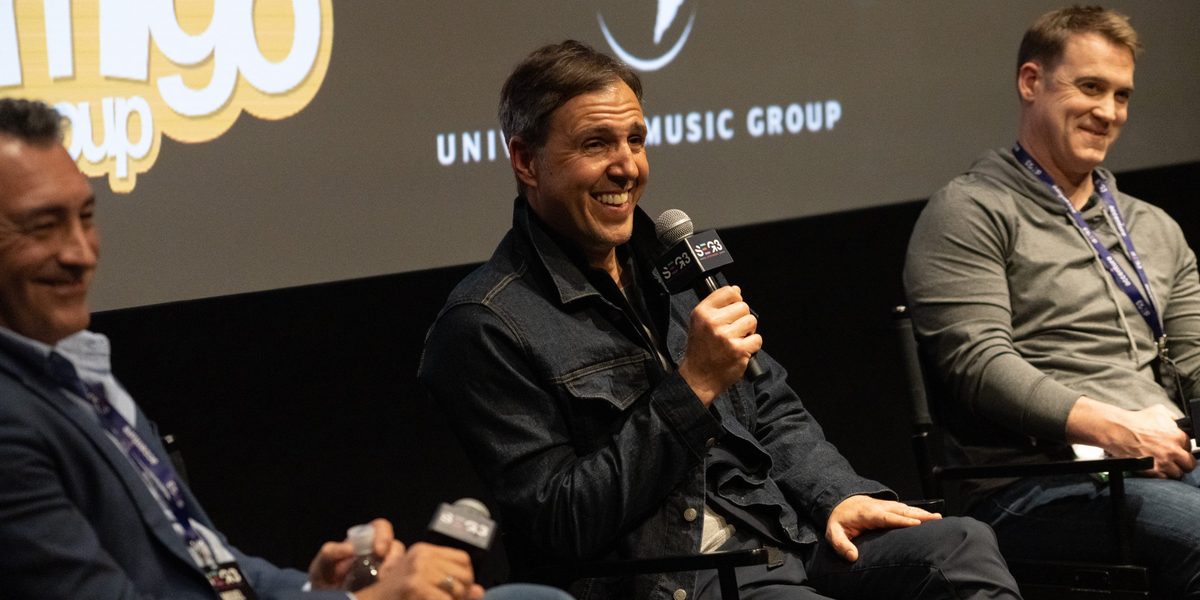
Be part of the conversation alongside leaders from sports, entertainment, gaming & music in Beverly Hills this December 8-9. Claim your 20% reader discount below.
Now, what you all came for: edition 136, in which I’m looking at Disney and Adobe’s nascent partnership, in which Adobe has been named the mouse-house’s “AI Innovation Partner”, and what anyone across sports, entertainment, and gaming can learn from their strategy.
Plus, our speed reads:
CeraVe becomes “The Official Moisturiser of Arrakis” in its first-ever film partnership with Dune: Part Three
The Game Awards adds Disney+, Roblox and Live TV on PS5 to its 2026 streaming lineup
Let’s dive in!
Disney names Adobe its ‘Official AI Innovation Partner’
If you wanted to watch a company work out its AI position in public, Disney’s last twelve months would be a decent case study. It started on the offensive: it sued Midjourney alongside Universal for what it called a “bottomless pit of plagiarism” (a phrase that I love, frankly!). It then sent cease-and-desist letters to Character.AI, Google and ByteDance.
Then came the olive branch. In December, it signed a three-year deal putting more than 200 characters into OpenAI’s Sora, with a joint steering committee checking user creations against a long list of things Disney didn’t want its characters near. It looked like the template everyone had been waiting for, and we said as much in edition 97, where Joe argued that shaping how your IP shows up inside generative tools beats chasing it afterwards.
Three months later, OpenAI shut Sora down, and Disney walked away before money ever changed hands, according to Cartoon Brew. Now, Disney is stepping back into the AI fray. They named Character.AI's former CEO, Karandeep Anand, as the first-ever Senior Executive Vice President and Chief Technology Officer. And it hasn’t stopped there…
What the Adobe deal reveals
With all of this context, the Adobe announcement looks like a course correction. Disney will build models on Adobe’s Firefly Foundry, trained on its own characters, environments and visual styles. Adobe and Disney describe the underlying model as built on licensed and proprietary assets, then customised with decades of Imagineering work.

It might seem on the surface like a contradictory move, given the Midjourney lawsuit, but it actually reveals plenty about Disney’s new AI generation strategy.
Permission. It has become the key - which, frankly, feels obvious. It is a strategy shaped as much around what an AI produces as it is about what AI learns from.
That matters beyond Disney: whoever controls the training material controls the output, and the best way to control it is to own the model’s education. A licence to someone else’s platform gives you terms, and a model trained on your archive gives you a capability that doesn’t disappear when a vendor changes its mind (or goes bust!).
Adobe says Foundry customers keep ownership of their data, content and outputs, something which will be put to the test once contracts start rolling out and creative content begins to go live.
This is where Disney’s story meets Hasbro’s. Disney and Adobe are governing how a character is drawn. Hasbro is governing how it behaves when someone talks to it.
Hasbro’s Sixth Wall details how a character thinks and speaks live, through a golden record of canon, voice and guardrails, with moderation screening everything in and out. Folks who attended SEG3 London were lucky enough to see some of this live, and Gray and Sixth Wall CEO Bertie Thomson will be back at SEG3 LA to showcase even more of Sixth Wall’s growth and share more of how they shaped their strategy in the License to Generate session.

Sixth Wall and Disney are each tackling the way AI can be put to great use, while also keeping its characters from being anywhere they shouldn’t.
The least glamorous use is the most interesting one
It’s easy to skim past what this new “alliance” is actually doing for Disney: turning hand-drawn sketches into rendered concept art, with months of work compressing into days and weeks. Nobody is generating a new Mickey for fans to play with. It’s workflow AI, pointed at the slow middle of a creative process.
I think that’s deliberate, because it’s the version of AI fans find easiest to accept. We’ve talked at length about where AI is most seamless. Luminate’s report on AI in Music, Film, and TV, which I covered in edition 108, said in short: that AI in workflow is acceptable to fans, but not so much when it supplants a creative person or process.
That it all starts with concept art gives Disney a track record to prove where the human touch remained before anyone starts to pester them. All you have to do is look at the recent raft of AI-in-creative missteps: just look at Dior, which is facing a slew of backlash for seemingly using AI in a video that it claims was hand-animated. The fashion house even uploaded behind-the-scenes proof, but critics were quick to pick that apart, too. (For the record, nothing has been settled on whether the video was made with AI, or to what extent it was, as of writing.)
For Disney, having full control from inception, during that middle creative process, and through output also lets the company learn what its own artists will and won’t accept, which is a great place to start for a company trying to build trust in its AI-influenced work.
Beyond Mickey Mouse
The part of the announcement I can’t stop thinking about is the ESPN angle of it all. (I have to admit, I had forgotten that Disney actually owns ESPN!) As part of this partnership, Adobe and ESPN will look at how AI can deepen sports fan engagement and bring ESPN’s archive to life. As of yet, there’s no actual product attached, but this part of the announcement shows the underlying strategy and usefulness for ESPN.

Sports have always been rich in archives, but how to use them is tricky. Decades of footage, highlights and documentary material sit in libraries that have little interactivity - and rarely see a spotlight. A model trained on that catalogue is a unique kind of asset, and is built on a strategy that every league and club with a back catalogue could emulate.

It isn’t the first time an IP holder with a rich catalogue has sought to capitalise on their historical archive. We’ve mentioned before how Banijay partnered with creators to reinvigorate its older content for YouTube. However, this is more akin to a ‘licensing’ strategy: creators were given a certain amount of freedom to remix and reimagine that original content.
For a company like Disney, however, handing over those creative reins may not seem quite as appetising. Likewise, a league may not want to hand over the likeness of its actual, real human athletes and coaches (it may not be able to!), so building or partnering in this similar vein gives them a new route to reinvigorating back catalogues.
Closing thoughts
The biggest lesson I took from all of this is about choice. Disney didn’t choose between enforcing, licensing and building; it tried all three. Of course, every option costs something. Enforcement is expensive and rarely complete (that Midjourney lawsuit is still in court), licensing turns infringement into revenue, but hands over some control, and building needs real resources.
No answer is right or wrong, and each strategy offers learnings and benefits. But for a company like Disney, with the aforementioned real resources, and a huge back catalogue to draw on, the reward outweighs any potential risk.
The partnership Adobe and Disney have come up with is built on the same underlying impetus that drove Sixth Wall: instead of fighting or borrowing, Disney decided the safest place for its characters was inside the (mouse) house it built itself. (Sorry, I couldn’t help myself.)

CeraVe becomes “The Official Moisturiser of Arrakis” in its first-ever film partnership with Dune: Part Three
TL;DR
Dune’s desert does the explaining, so CeraVe doesn’t have to justify why a moisturiser is there
The teaser sets up a sandworm and delivers a jar of cream, a joke you only get if you know the film
The campaign runs from teaser to premieres to opening day, so CeraVe gets weeks of moments instead of one launch
Why you should care
Most film partnerships have the same problem: the brand has to squeeze itself into a story it has no business being in. CeraVe doesn’t, and I think that’s why this one works. Arrakis is the driest planet in fiction, and a moisturiser turning up there needs about one sentence of explanation.
In edition 102, we talked about the test for Coca-Cola’s partnerships with film was whether a specific product belongs in a specific movie.
The creative leans right into that. The teaser, “Defy the Desert,” has a Thumper beating the sand and everyone waiting for a sandworm to burst out. Then a jar of CeraVe Moisturising Cream rises instead. The follow-up spot, “Precious Resource,” asks whether spice is really the most valuable thing on Arrakis.
Only people who know the film will get the joke, which makes the ads feel bespoke. They are social-first videos, so fans choose to watch them, which is an important point given what we saw with Spider-Man and BMW, covered in edition 122.
CeraVe has also earned the right to be funny. The brand calls its style “medutainment,” and this campaign comes from the same studio behind its award-winning Kevin Durant “New Face of Legs” work. It fits into what BBC Studios CEO Shelley Macintyre said in her episode of our podcast The Speakeasy about a brand’s “permission to stretch”: a brand can only stretch as far as its audience lets it. CeraVe has spent time building that permission.
The brand says it sells a unit every three seconds in the US (I myself have owned several CeraVe products — including since moving to the UK!), so I don’t think this is about reach. The aim, as I see it, is to put its products in front of people who aren’t as familiar with the brand, tying it into something they already know and love: the world of Dune.
If you hold IP, the takeaway for me is to look for the one thing about your world that people instantly understand, and ask which brand could credibly exist in it. If you’re on the brand side, find the one thing your product does that the world already makes obvious, and trust the audience to get the joke.

The Game Awards adds Disney+, Roblox and Live TV on PS5 to its 2026 streaming lineup
TL;DR
Adding screens without ever going exclusive is how The Game Awards keeps growing
On Roblox, fans can vote and claim merch during the show, so watching comes with something to do
Disney+ is bringing its own game announcements, so the host platform gets something out of the night too
Why you should care
Some awards shows would take a single big streaming cheque, but the show’s host and executive producer Geoff Keighley told Variety he’s had lots of offers to move to one platform and keeps turning them down, because each new partner is “additive.”
Disney+ and Roblox are two of the latest platforms to host the show. Disney+ is teasing announcements from its own gaming titles, which shows that it, too, is getting something out of the night. On Roblox, this is the first time an outside awards show has livestreamed on the platform, and it’s 18+ only, with voting, interaction and virtual merch.
The Roblox stream is the one I like most, because it gives fans something to do and not just something to watch. We’ve talked a lot about how this distinction is what fans really want, and the shift from passive viewer to active participant fosters long-term loyalty. It also reflects the kind of reach strategy Roblox is employing through its creator features, which we covered in edition 127.
The show is also available on Live TV on PS5. This proliferation of platforms one can watch the awards show on is a reach strategy, rather than an exclusivity one. And this makes sense because The Game Awards are still not quite as ubiquitous in broader culture outside gaming and entertainment as, say, the Oscars.
But that is changing…In part, because of the GTA VI of it all.
The game launches on 19 November, the nominees are announced today (17 November), and it’s hard to avoid the impact the game is having on the Awards, but also outside of the gaming silo.
Brands are capitalising on the anticipation around GTA VI. Spotify is running GTA VI billboards in three US cities, and a 34-track album with Atlantic Records lands the same day as the game. DesignRush reported it’s only the second time an outside brand has carried Rockstar’s artwork, after YouTube backed Trailer 2 in Times Square. This is interesting when you remember that the game itself is closed. And GTA 6 won’t carry real-world product placement. This means the place for brands to piggyback is on the cultural moment around the game, rather than the game itself. All of this ties is equally fertile cultural ground for The Game Awards to tie into.
All of this cross-pollination is going to be explored at SEG3 LA, which takes two days before The Game Awards. Before the biggest names in the biz (like SEGA, Blizzard, Roblox, Supercell, Bandai Namco, 2K, Riot Games and more) find out who has won, they’ll be under one roof with us in Beverly Hills, on 8 and 9 December.
In other news
Banana Republic announces "The Agency," a short-form original series starring Jack Innanen: read more
Can Pikachu help heal a disaster zone?: read more
NBA 2K27 meets Vice City: watch
Race Sim Studio brings its first officially licensed Formula E car to Assetto Corsa: read more
Netflix Ads presents Still Watching 2026 report: read more
Medialink announces its first-ever equity collaboration with Kadokawa Corporation: read more
Roblox reveals agentic conversion tools that bring games to the platform: read more
Backdrop or partner? When fans flood a filming location, the contract decides who earns: read more
Star Wars: Episode IV – A New Hope to play at Cosm as Disney teams with shared reality firm: read more
What Grand Theft Auto tells us about Britain’s forgotten young men: read more
Carnival gamifies cruise experience via interactive Twitch livestream: read more
Kpop Demon Hunters' Golden World Tour dates revealed: read more
A new journey begins | Aston Martin and Star Wars unite: watch
Disguise acquired by Yamaha Corporation: read more
Tubi and Kickstarter launch The Fandom Fund: read more
Google launches new Intelligent Eyewear collections: read more
Xbox putting Master Chief in Candy Crush Saga was not on my bingo card for the 25th Anniversary: read more
MotoGP and ESPN announce multi-year broadcast agreement across the United States and Latin America: read more
Roblox horror hit dandy's world is finally leaving Alpha with a massive 1.0 update, new game mode, and more: read more
Working on anything cool, or have a press release you would like us to cover? Send it in for the chance for it to be covered in next week’s edition!
That’s all for now, everyone - thanks again for reading the latest edition of The SEG3 Report. If you found it of interest, please do consider sharing with a colleague or friend who’d enjoy it too!