

Hi everyone! Edition 134 of The SEG3 Report is here, and this week, I’m exploring what “effort signalling” means and how human creativity has become an inimitable value-add for anyone building fandom.
Plus, our speed reads:
Bundesliga, Playmobil & Trickshot team up for Bayern vs Dortmund altcast
TBS and the International Modern Pentathlon Union to Collaborate on Ninja Warrior and Obstacle Racing for the LA28 Olympic Games
Let’s get into it.
I knew a girl in high school who learned Elvish. Now, I love Lord of the Rings, but this was a step too far even for me. But let me tell you, I was impressed (and jealous, frankly). The amount of time and effort it took for her to do this was astounding.
This predated social media, but with its proliferation, the ability to show off the way you wear, honour, and shout about your fandom has become that much more visible. And with Halloween just past, my Instagram feed was full of friends dressed as their favourite characters. I’ve dressed as Angela from My So-Called Life, Daria, Debbie from The Wild Thornberrys, and the ‘personification of Chrome’ for a Mad Max-themed party. (I was really proud of that one. Fury Road is one of my Letterboxd top four).
I digress.
The point of my rambling is that for a long time, this effort signalling was the purview of fans and fans alone. But recently, brands have cottoned onto the fact that effort signalling is a great way of showing respect for not only their product, but also their consumers (and fans) — and proving that their products, and the way they market them, aren’t cheapened by the intervention of AI.
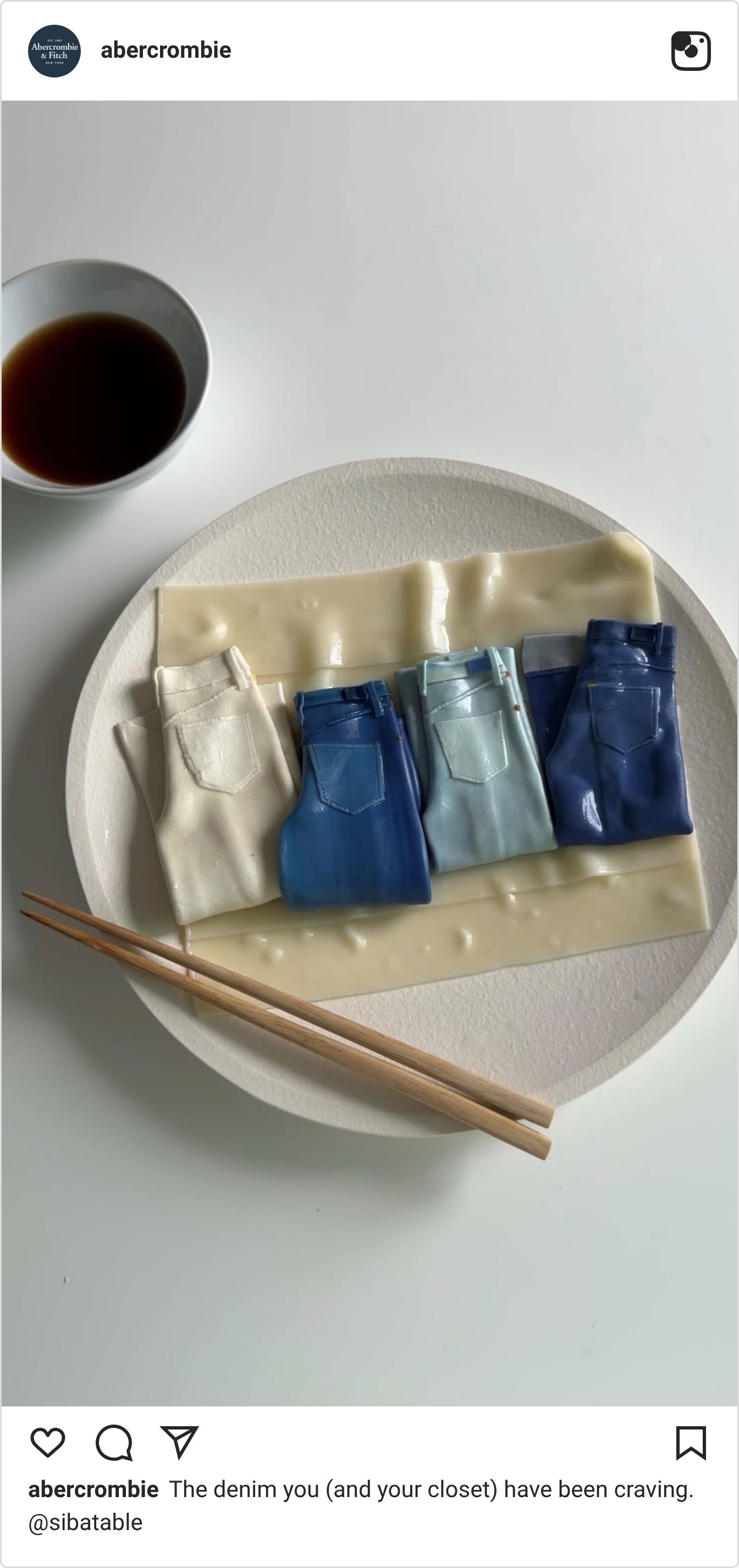
What got me thinking about this theme was a story in Vogue from earlier this month. It covered a reel of a pair of jeans, folded and lined up like they were on a shelf in an Abercrombie & Fitch store, except each pair was about the size of your palm and made entirely out of pasta.
The Reel has been viewed more than five million times, well ahead of the brand’s other videos. Vogue’s piece on why this is happening is about fashion specifically, but it’s a useful lesson for folks in the broader sports, entertainment, and gaming world.
Introducing: effort signalling
The term comes from brand consultant Miranda Shanahan. It describes brands showing the time and skill behind something to justify what they’re charging for it. Shoppers are increasingly asking whether luxury is worth the money, and Shanahan’s view is that how long something takes to make has become one of the clearest signs of its value.
You can see it in who brands are hiring and the campaigns they’re running. Hermès commissioned hand-drawn animations for its new London flagship, Chanel had an illustrator create a teaser for its Fall/Winter 2026 Haute Couture show, and Dior, Lacoste and Loewe have all been working with illustrators and animation studios.
Why this matters more in fandom
Shanahan makes a point I thought was fair: the people getting angry in the comments about AI in luxury fashion probably aren’t the ones spending lots of money on a single garment. That might hold in that luxury fashion space, but I don’t think it holds for folks dealing with fandom more specifically. In fandom, the people in the comments are often the ones making the art, the edits and the costumes. They do a lot of the work of keeping your IP alive.
That brings me to Zoe Scaman’s recent newsletter edition, The Tithe, which I’d recommend reading in full. Her idea is that fans pay for their place in a fandom with time and effort rather than money, and that this only works if other fans can see the effort. Generative AI has muddied that, because a story that took twenty months to write and one generated in ninety seconds can now sit side by side on the same page.
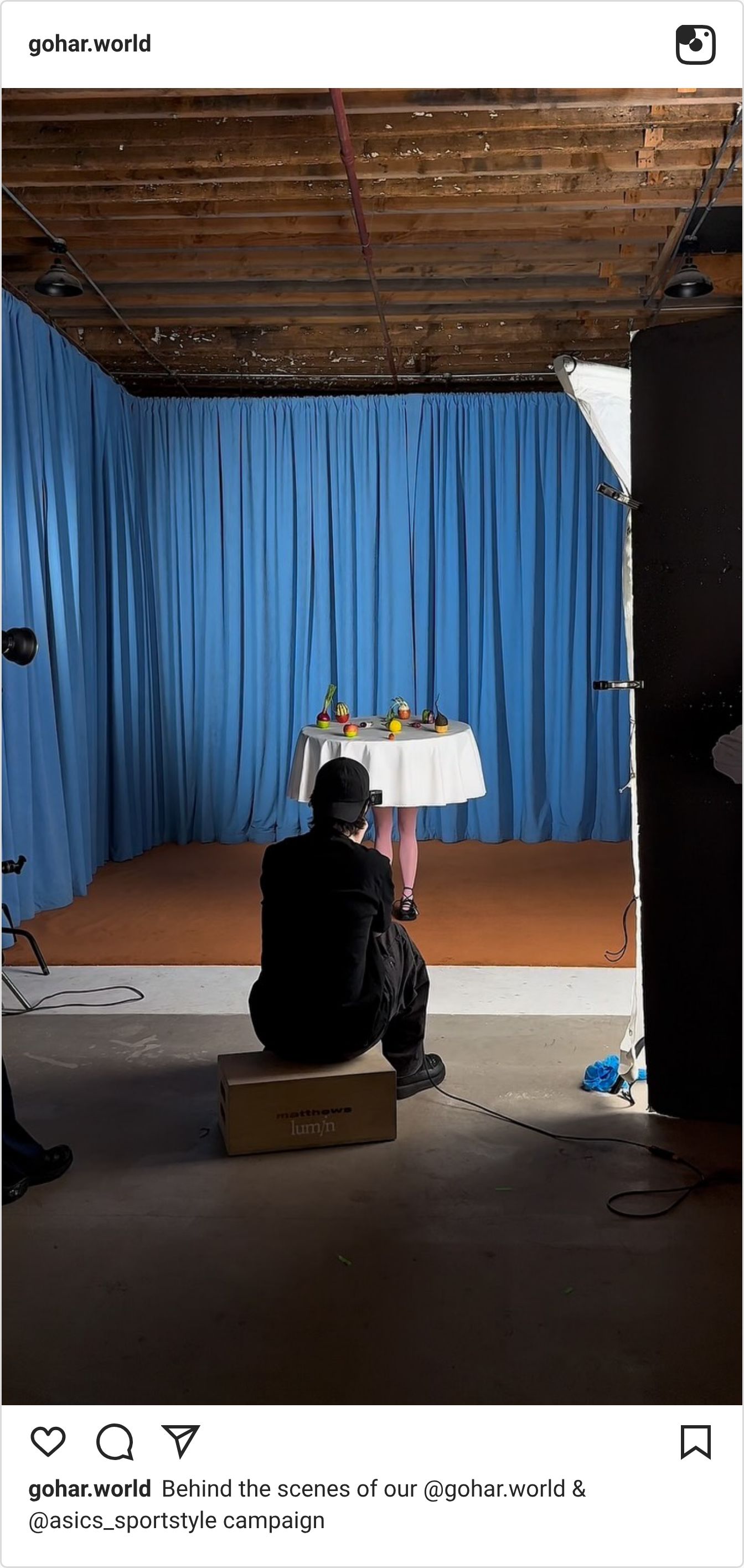
The Gohar World example in the Vogue piece is the brand version of the same problem. When it shared its collaboration with Asics, some viewers asked whether the video was AI. The brand ended up changing its caption and posting behind-the-scenes footage to show it wasn’t. Scaman describes fan artists doing something similar, with time-lapses and layered files as proof.
There is data to back up the general mood. A YouGov survey of Australian adults found that 45% would trust a brand less if they discovered its ads were mainly made with AI. Entertainment and gaming were among the categories people were most comfortable with it in, but that was only 20% of respondents, which feels like a low bar for “most”.
Where AI fits in all this
Shanahan herself says that something not being handmade shouldn’t make it worth less, and that brands can do more to show how things came to be.
I’ve written a lot about AI in workflow. In edition 108, I looked at Luminate’s report on younger audiences and GenAI. Between May and November 2025, interest in AI-written film and TV fell from net -9% to net -20%, with Gen Z and Gen Alpha moving fastest. There’s also the trust factor, which I went into in edition 125. IBM’s Sports Intelligence Report, which surveyed 20,000 fans in 12 markets. 69% of fans now use generative AI, but trust in AI-generated sports content sits at 59% and fell in seven of the twelve markets. This, combined with the IOC’s nascent Trustworthy AI Framework (which I wrote about in edition 131), showed that oftentimes AI doesn’t need to be flashy or sexy — it has to make a process smoother and, usually, be invisible doing it.
The flip side of this ‘invisible AI’ means that often, proof that AI wasn’t involved becomes even more important. The Gohar World story shows this plainly; it was a brand having to prove that something was not AI. I think disclosure is only half the job, and the other half is proving the human work that went into it.

Neverness to Everness is a good example of it going wrong. Its marketing leaned on the work of its artists. Then, days after its May launch, players spotted art that looked AI-generated, and the studio confirmed it had used AI tools on some of the environment art. For them, I’d say the problem wasn’t only the AI but the gap between what the game and its campaign said about itself, and what players found to be true.
Where AI makes more sense is somewhere fans aren’t looking for effort, like behind the scenes, or in tools that give fans more to make with. Scaman’s example is Hatsune Miku, whose fans are happy with an AI voice because the songwriting and tuning are still done by them.
This feels like a niche exception, though. In general, fans are less likely to feel positively towards content where AI had an overwhelming role in the creation (and the creativity) behind it. There’s only so much waxing poetic one can do about how to draft the perfect prompt. In the end, the value a fan, or consumer, or audience member feels is tied to feeling respected.
This respect is something that not a lot of people are talking about (she says confidently). When a fan feels like a brand is putting in as much effort as they do, that translates not only into trust but respect.
People doing the making
One concern is around what happens when “handmade” becomes a look rather than a fact. It wouldn’t be hard to generate something with a hand-drawn feel and let people assume there was a pencil involved. Fans are good at spotting this, as the Neverness to Everness players showed. And in this way, we come back to the premise of effort signalling. It’s not enough to look handmade; the proof of the pudding is in the making.
Sidebar: I love the etymology of clichés. The real phrase is “the proof of the pudding is in the eating.” I have obviously tweaked it here. Could AI do that? …Don’t tell me if it can.

Arsenal’s 2026/27 third kit launch is a good sports example of doing this. It’s the club’s first animated kit campaign, directed by Fx Goby with Nexus Studios. He told Creative Review he went for a warm, sketchy, hand-drawn style to keep the film feeling human and tactile. The amount of detail present in the Behind the Scenes film makes a mass-produced kit feel that much more special. It’s a similar strategy to Aardman’s Behind the Craft series, which I also talked about in edition 108.
This push towards transparency and ‘proof’ of the human touch led to the creation of the Human Made Mark, billed as a “Fairtrade label” for adverts made by real people. Human Made Mark’s creator William Grave said it better than I could:
“Great comms has always been about authenticity…Brands should disclose generative AI usage for the sake of transparency, but we believe in the positive flipside. The Human Made Mark empowers brands to celebrate the human artists they have invested in, in their commercial, a powerful signal to their audience they choose people over prompts, artistry over algorithms. When anyone can generate AI imagery, human craft is the new premium.”
As generative AI makes it easier to create, the value then comes from those things that were harder to make.
Closing thoughts
A few months ago I went to an art exhibit at the Daiwa Foundation, and then was invited to a dinner; a sort of artist’s salon-style night (which I loved) during which we talked about Capital I Important themes as they relate to art and society. Of course, AI was one of them.

One point I made was this: I love writing. I love choosing words and thinking of ways to connect paragraphs, to break up sentences, and to hammer home points using punctuation (and I will never let go of the em dash). Sometimes, I rewrite the same sentence three, four, five times just trying to get it right. Why would I give this to AI to do? I love it. It’s the thing that has tied my whole career together — from my terrible middle school poetry to my published film reviews and, of course, this newsletter! I love it because the feeling when you write a great headline, or weave in a beautiful quote, or think of the exact right anecdote is so satisfying. And having other folks read that, understand the effort you’ve put into it, and come away with a new opinion or thought is gratifying like nothing else.
That is the thing consumers are looking for: the effort, the love, and the creativity that comes with making something; the spending of time, and effort, and energy. Fandoms especially have always cared about that. If you can show your work, and give fans a way to join in, it puts you in a much better stead for long-term brand health, and gives you something truly unique to shout about.

Bundesliga & Trickshot turn Der Klassiker into a Playmobil toy box
TL;DR
The “Football Funzone” stream mirrored the live match, using skeletal tracking that follows 21 points on each player, with Trickshot commissioned to build it
Playful embellishments ran throughout: the ball became a pumpkin, a fireball and a Ballon d’Or, and Michael Olise picked up ski goggles and a magician’s outfit
Gamified elements like “Slime Squares” were aimed at younger viewers, as part of their push to widen its audience
Why you should care
The thing I love most here is the brief Trickshot’s CEO describes: be as silly and fun as possible. As someone who isn’t particularly attuned to the bigger cultural nuance of football, I found The Athletic’s coverage - and the entire Play Mobil exercise - exceedingly fun. As journalist Conor O’Neill wrote: “Let’s just sit back and enjoy a little playful whimsy in a sport that can take itself dreadfully seriously at times.”
Here, whimsy doesn’t mean frivolous and, in a way, this mirrors what I wrote about above — the value is in the effort and the details. As The Athletic pointed out, Kane’s dribble was recognisably Kane, right down to the hunched stance over the ball, and Olise’s goggles and top hat nodded to who those players actually are. Fans get to see their heroes as toys and still recognise their style and personality.
It also worked because it didn’t pretend to be perfect. The tech glitched (one midfielder lost half his body into the turf - it was Halloween I guess), and the commentators treated it as part of the joke.
The technology behind it, skeletal tracking data, already powers semi-automated offside, and is starting to become a much more utilised part of the live broadcast, for a select group. The alt-stream showed that the Bundesliga isn’t replacing the traditional broadcast: a tactical-cam version ran alongside it for viewers who want something more serious.

TBS and the International Modern Pentathlon Union to Collaborate on Ninja Warrior and the New Discipline of Obstacle Racing for the Los Angeles 2028 Olympic Games
Since its first broadcast on TBS in 1997, Ninja Warrior has aired in more than 160 countries and regions, with local versions produced in over 25 countries.
TL;DR
What changed hands is obstacle design, the part of Ninja Warrior audiences already recognise, so a new Olympic discipline arrives half-explained.
The test events since 2022 mean this was proven in sport before it was announced to fans
Both sides now have a runway to LA28 and a cross-promotion framework
Why you should care
This partnership brings together two very different worlds. Tokyo Broadcast System is a Japanese broadcaster whose format has aired in more than 160 countries and regions, with local versions in over 25. UIPM governs a sport that has been on the programme of every Summer Games since 1912.
Each side brings an audience the other doesn’t have. TBS reaches entertainment viewers, including the US audience for American Ninja Warrior, now in its 18th season on NBC. UIPM reaches Olympic viewers. The source gives no audience overlap data, so how much those groups share is unknown.
What connects them is the licence. UIPM can now use certain Ninja Warrior IP and programme elements, such as the design of certain obstacles. That’s the part of the show viewers recognise at a glance, so the two audiences meet on familiar ground.
At the Tokyo Film Festival Content Market, which took place last week, TBS’ president of the global business division Shinya Watanabe (who we welcomed to SEG3 Tokyo in September) talked about Ninja Warrior’s legacy, as it heads towards its 30th anniversary, and ambitions for the series including indoor parks in the U.K., Germany and the U.S., merchandise and licensing, and placement advertising within the show. The partnership with UIPM is one of many strings in Ninja Warrior’s bow, priming it for a successful transmedia strategy.
I think the biggest new-fan opportunity sits with the viewer who loves Ninja Warrior but has never watched pentathlon. Equestrian show jumping has been replaced at all levels by a discipline built on obstacles they already know how to enjoy. For TBS, the upside is a 30-year-old format in front of Olympic audiences who may never have come across it.
This is the gateway logic we covered in edition 119, where entertainment IP pulled a fan towards a sport they wouldn’t otherwise have watched, and it helps when the IP already has sport in its DNA, which Ninja Warrior does. Indirectly, it’s another way for LA28 to resonate with viewers, which LA28’s CMO Alex Merchan is exploring at SEG3 LA!
In other news
Yakuza Blocks: Like a Dragon is out now on Roblox: read more
South Park gives us a first look at GTA 6’s most disgusting feature: read more
Paramount+ acquires rights to moonbug series from the ‘Blippi’ and ‘CoComelon’ universes: read more
First immersive Candy Land retail experience in the US to open this month: read more
RedBird Capital Partners and Sound Ventures partner to invest $1 billion in emerging tech: read more
Japan’s Anime market hits record $28.2 billion as local sales surge: read more
KFC UK & Ireland launches on Roblox for the first time: read more
LA28 reveals star-powered slogan set to shine across Olympics marketing: read more
Formula 1 and Consumable launch the F1 Audio Network, extending fandom beyond race day: read more
Anime licensing platform AniBiz Gets $6 million investment from Japan’s TBS Group, Toei Animation and TV Tokyo Holdings: read more
Fortnite x One Piece collaboration Trailer: watch now
Rom-Com ‘Eavesdropping’ tests the future of scripted social video: read more
Backstreet Boys launch Backstreet Gamers in Global Gaming League: read more
Working on anything cool, or have a press release you would like us to cover? Send it in for the chance for it to be covered in next week’s edition!
That’s all for now, everyone - thanks again for reading the latest edition of The SEG3 Report. If you found it of interest, please do consider sharing with a colleague or friend who’d enjoy it too!