

Hello folks.
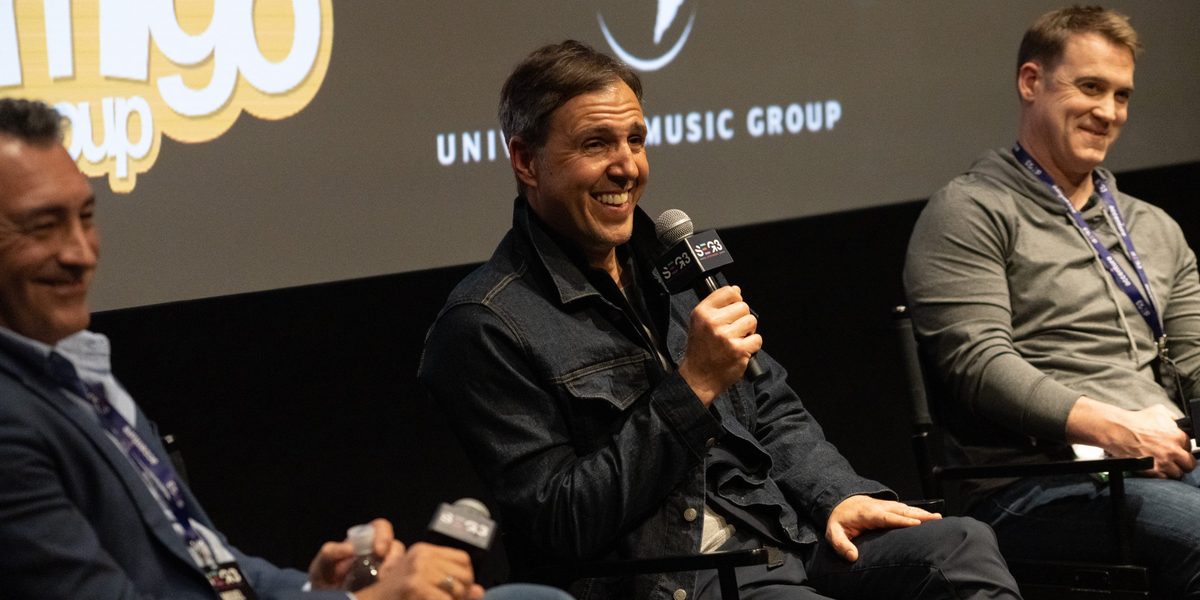
Before we dive in, SEG3 LA is now only four weeks away. If you enjoy what we cover here, join LA28, Blizzard, Netflix, Red Bull and more in Beverly Hills this December 8-9. Claim your 20% reader discount below.
Right, onto edition 135.
This week, I’m diving into the new partnership between Transmit and Fandango around Bundesliga streaming, and how they’re planning to bring brands into live event moments without adding ad breaks.
Plus, our speed reads:
WWE & Walt Disney Company expand partnership with two-day takeover, where John Cena Classic & Marvel Studios' Avengers: Doomsday-themed worlds collide
Adobe Premiere mobile to let creators add up to 60 seconds of tracks to their videos, after deal with UMG & WMG
Let’s get into it.
Selling the moment
I’m pretty sure you’re all sick of me saying I’m not a sports person, because, one, it’s not entirely true and two, I’m writing a lot about sports! I wrote previously about my time as a competitive swimmer, and how fundamental it was to me. Growing up, swimming was very much not a ‘spectator sport’. The only people who ever came to my meets were my family, the families of my swim-teammates, and occasionally a friend who was forced along because they chose the wrong weekend for a sleepover.
Since my teenage years, though, swimming has become more of a draw. Swimmers themselves have cultural cachet in a way they didn’t in the early noughties. I like to talk about how exciting swimming is to watch, but I acquiesce it hasn’t got the same kind of heart-pounding, can’t-look-away moments as something like football or basketball.
Which is my brilliantly penned segue into the Transmit and Fandango partnership built around those hold-your-breath moments.
Fandango (yes, that Fandango, the one you know for movie tickets) is Versant’s free, ad-supported streaming service (in addition to being, you know, the ticket place!), and it’s now the US home of the Bundesliga. At least 30 matches are on USA Network, and every other game streams free on Fandango.

Transmit is an ad tech company that works with sports leagues, broadcasters and streaming platforms on monetising live sports and streaming video. Its technology looks for the points in a match when attention spikes, like substitutions, momentum swings and official reviews, and lets brands attach themselves to those moments without adding ad breaks.
Seth Hittman, Transmit’s CEO, talked about the World Cup hydration (cough: ad) break as his comparison. It works as a sponsorship because it’s “part of the experience, not an interruption to it.” The hydration break wasn’t exactly well received outside the States, but Transmit and Fandango’s plan seems more fluid in its execution (pun intended).
When ads become annoyances
A survey reported by Advanced Television found that only 24% of viewers actually pay attention to streaming ads, while 76% feel the big platforms carry too many.
And, to be fair, rights holders are listening. NFL RedZone halved its ad load on the opening Sunday of this season after fans pushed back on the double-box ads that debuted in 2025, according to Awful Announcing. And for fans, paying your way out doesn’t fully work either: as The New York Times has reported, live sports on the big streamers carry commercial breaks, whatever tier you’re on.
Meanwhile, streamers are projected to spend $14.2 billion on live sports rights in 2026, more than double 2022, per Ampere Analysis. Something has to pay for that, and selling the moment rather than the break feels like a much friendlier answer than simply adding more breaks.
A lesson from the hydration break

Mandatory hydration breaks for every match were new at this summer’s World Cup, and broadcasters wasted no time treating them as inventory. Fox cut to full-screen commercials, and Powerade was named official sponsor of the breaks. Powerade is a natural fit for a sports match, and the break itself was already ‘built into’ the pace of the game, so to speak.
However, geography had an important part to play in this. Here in the UK, Ofcom’s advertising limits meant ITV skipped ads during the breaks. Instead, we were treated to more chat — for a die-hard football fan, that might be a good thing. (All it did was allow my partner and I, casual viewers, a chance to get a drink and pet the cats.)
Transmit’s strategy is based on the idea that a match is full of natural pauses, not just a few mandated ones, and that those moments make for far more fertile advertising spots.
There is data to support that strategy, too. In edition 111, we covered Genius Sports’ research, which found that ads placed after high-intensity moments roughly doubled unaided recall.

That means that the post-peak-moment inventory could command a premium, and that rights holders with the data to spot and sell those moments would be in the stronger negotiating position. Transmit is that idea packaged as a product.
It also picks up a thread from edition 88, where we looked at Genius and Publicis building ads triggered by live game events and fan emotion. Joe wrote then that sports could borrow from gaming, where brands have long bought moments rather than slots, so long as buying them was easy. The Fandango and Transmit strategy is test of exactly that: a free platform, a fresh audience and a simple way for brands to hop onto a moment.
Trading revenue for reach
According to Awful Announcing, the Bundesliga took roughly a $10 million hit on its US deal when it moved from ESPN to Versant’s Fandango, trading revenue for reach. A league that has made that swap needs a way to make up that delta.
Fandango viewers are casual, curious, and in all likelihood, meeting the Bundesliga for the first time. For a brand, that’s a rare chance to be introduced to a fan at the exact moment they fall for something. A sponsor attached to a last-minute winner becomes part of the memory, and that emotional connection fosters a much stronger tie.
Making the moment work
Transmit’s headline promise is more revenue without more ad load, which is clearly the right strategy given the audience’s response to increasing ad breaks. But it isn’t just a question of quantity; it becomes a matter of quality, too.
Variety will be the secret, and necessary, ingredient. In Clutch’s post-World Cup survey, 58% of viewers who were annoyed by ads cited repetition as one of the main reasons. Tubefilter documented the Wingstop and Liberty Mutual spots played on a loop through the 2024 NBA playoffs.
Where a ‘moment-based’ model has a natural planning advantage is because every moment is different; the sponsor can be too. On the flip side of the equation, the brands that treat each moment as their own creative brief will stand out — for the right reasons, not the wrong ones.
Closing thoughts
Every live format has moments fans already treat as sacred: a boss fight falling, a big reveal, a last-lap overtake (though swimming may still have a way to go for this). The brands that can capitalise on this will be the ones that know which of those moments they have a natural fit to be near. As we covered in edition 88, there are six key pillars for a successful placement:
Relevance - i.e. a Lucozade ad after Declan Rice makes his 17th recovery tackle.
Appropriateness - i.e. upbeat adverts after conceding 3 goals in 5 mins.
Aesthetic Connection - i.e. the ad matches club colours and doesn’t interrupt.
Granularity - reacting to smaller moments, i.e. a penalty save and an ad for a bank.
Ease of Use - i.e. advertisers can simply select and buy the moments that matter to them.
Effectiveness - i.e. did the ad drive the fan to action (search or purchase)?
Fans have shown they’ll welcome a brand that sits inside the match when the fit feels natural, and Transmit and Fandango have a free audience, a new league and a proving ground to show it. Let’s see how it goes!

WWE & Disney launch John Cena Classic & Marvel Studios' Avengers: Doomsday-themed Worlds Collide
The first-ever edition of The John Cena Classic will feature WWE’s biggest names across Raw and SmackDown against the brightest future Superstars from NXT
TL;DR
The partnership started as a place to watch and is now a place to be: a shared venue, shared product and shared release window
The John Cena Classic hands the audience a vote, giving fans ‘something to do’ not just something to buy, and provides WWE with deeper data and insight into their fans
The takeover creates a ‘side door’ for casual fans of either WWE or Marvel to become more dedicated fans of the other brand through a natural affinity
Why you should care
Here we are again with the product, digital and life layers! The belts are the product, the Netflix stream and live vote are the digital, and WWE World in Orlando is the life layer. Same shape, but this time it’s a film release date holding it together.
It’s also a different job from where this partnership began. In 2025, it was about where fans watch, with the ESPN App becoming the exclusive domestic home of WWE Premium Live Events for ESPN Unlimited subscribers. Two days at ESPN Wide World of Sports Complex is about what fans get to do.
WWE has been here before, too. We covered its Netflix move as a way to borrow a younger, global audience in edition 41, and its ReelShort microdrama as a test of a new one in edition 119. This is a similar strategy, and WWE is tapping into Marvel’s audience three days out from the Doomsday premiere.
Then there are the belts. A title belt does the fan-explaining on its own, much like the Darth Vader Raiders hoodie did, and the release has them on sale at WWE World, WWEShop.com and select Disney stores. If they’re limited, it’s a scarcity strategy, but if they’re everywhere for longer, it’s a breadth play; the information, so far, doesn’t specify, so I’m guessing it’s not a limited edition run. Joe flagged a particularly interesting post on LinkedIn by Nottingham Forest’s CMO. “Scarcity only really works when people care about what’s scarce. You need passion. You need an emotional connection. You need fans.” WWE and Marvel both have supremely dedicated fans, so in this case it’s the scarcity itself that’s the question.
There’s a side door here as well. Edition 132 looked at how the event around the IP now does audience-building work, and a Marvel fan who travels for the Doomsday edition of Worlds Collide meets WWE without ever having planned to. It’s the same pull we saw with a Star Wars fan being steered towards an NFL team.
As someone very much not into wrestling, though I love John Cena, the voting is the part I think is the cleverest. Fans decide who wins the night as WWE’s biggest names face NXT’s brightest future Superstars, and the only way in is to register for Club WWE. That covers two separate strategies: give fans “something to do, not just something to buy” and collect data while you’re at it. Fans are more likely to feel comfortable sharing their information if what they get in return is participation — and a hand in shaping the next generation of WWE stars.

Premiere mobile adds music from UMG and WMG, helping creators find the perfect track for every story
TL;DR
Licensed music moves from the posting stage to the editing stage: creators browse, preview and build the edit around the track from the first cut, with music-powered templates to start them off
The tracks are cleared for personal, non-commercial use only, and commercial projects are pointed to Adobe Stock Audio, meaning guardrails are already in place and creators can use without anxiety
Both labels talk about reach and engagement rather than revenue for artists
Why you should care
Most fan content starts with a sound. In edition 119, I wrote about ATP’s Tour Sounds and the fan-made FIFA playlist that racked up close to 158,000 saves. Here, the labels are going to where that fan content gets made, rather than waiting for the fan to bring the song to them.
The templates pair a track with a visual story, which turns “I love this song” into “I made something with it”. This is the same ‘give the fan something to do’ logic we liked in the Spotify listening-data campaign for Spider-Man in edition 122. Every finished video also does distribution work for the artist, which is the benefit both labels lean on. (Especially given there’s no comment about compensation for artists.)
The AI line caught my eye as well. The same app offers Firefly-powered tools to generate creative assets, and in edition 131 I wrote about the various places and ways fans will accept AI, most notably in the workflow, but not as part of the creative process, especially without disclosure. The release doesn’t make a specific point about labelling AI content, so I’m curious how a fan edit that mixes a licensed track with generated assets will be flagged.
Music is now a huge part of fan-made content, which we already know is a huge part of how IP awareness and engagement grows. It feels like a win-win for everyone involved, but the proof will be in what gets made, how it’s labelled, and where the attention - and revenue - goes.
In other news
Nippon TV’s Viral Pocket microdrama gets 3 billion organic views: read more
LaMelo Ball and PUMA enter the Upside Down With a Stranger Things sneaker pack: read more
KFC’s new Marvel-inspired menu lands ahead of Marvel Studios’ Avengers: Doomsday: read more
Chelsea Football Club and Chelsea Foundation support the Blues' local community through the launch of That's Proper Chels: read more
Google x Legend of Zelda: Ocarina of Time crossover: read more
WTA and Hello Kitty team up for first official merchandise collaboration: read more
New Driving Empire update: NASCAR x Voldex: read more
EA SPORTS and NFL bring real stadium sponsors into Madden NFL: read more
How AC Milan drove up to 1.5× the engagement with personalised video: read more
How BlizzCon 2026 set the stage for Blizzard Entertainment’s next era: read more
Mike Lee and Darren Yan Unveil ISO, a next-generation management firm specializing in creators, live streamers, gaming and music: read more
Paris Creator Week Aims to become the cannes of the creator economy as new study forecasts $1.2 trillion global market: read more
There’s no slowing down media’s pivot-to-video 2.0: read more
The rise of microdramas: The 'snackable' shows made for the scrolling age: read more
Netflix used to chat a lot about its plans for video games and podcasts. Not anymore: read more
Fanatics unveils credit card that looks like a trading card: read more
Create the next Premier League subs board: read more
The countdown to the LA28 Olympic and Paralympic Games just got a lot more flavorful: read more
UK Consumer Navigator Q3 2026 Financial Services Report: read more
Government betting on language app powered by anime and AI: read more
Working on anything cool, or have a press release you would like us to cover? Send it in for the chance for it to be covered in next week’s edition!
That’s all for now, everyone - thanks again for reading the latest edition of The SEG3 Report. If you found it of interest, please do consider sharing with a colleague or friend who’d enjoy it too!