

Hello folks.
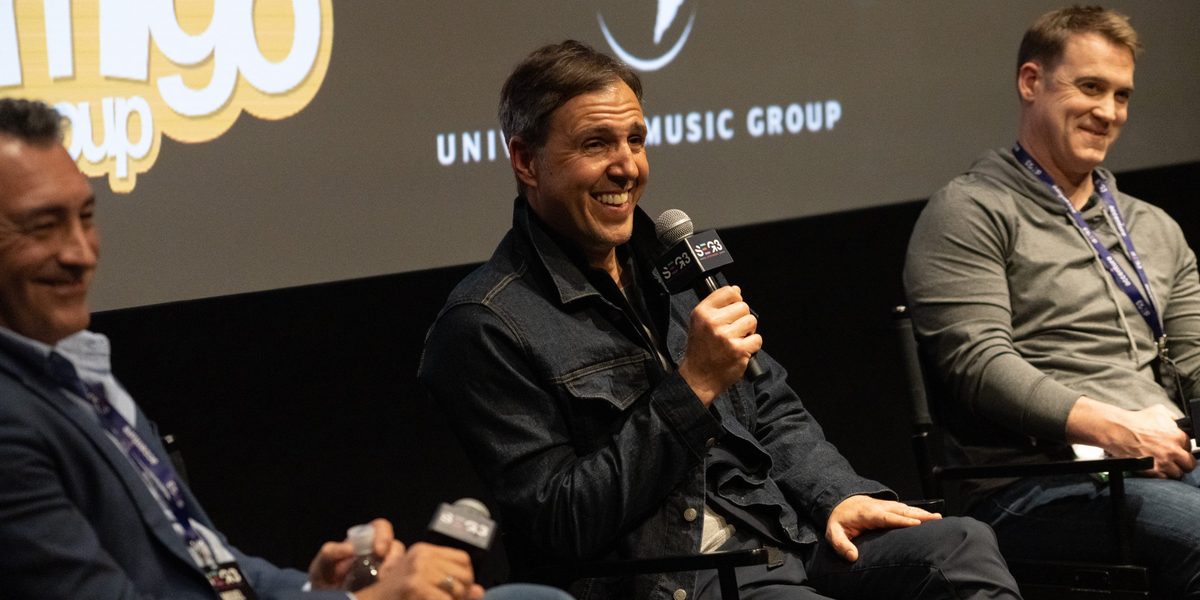
Before we dive in, a quick heads-up: Early Bird passes for SEG3 LA end on Wednesday, November 25 at midnight PST.
Readers get an extra 20% off, so grab your spot alongside the leading marketers and innovators behind the biggest sports, entertainment, gaming, music and lifestyle brands ↓
Now, what you all came for: edition 137, in which I’m, of course, looking at Grand Theft Auto VI and how an IP that had been quiet for 13 years managed to generate a record-shattering, pop culture zeitgeist-shifting launch.
Plus, our speed reads:
Sonic the Hedgehog & McLaren Racing tease animated special
Baller League launches a $1m Nations Cup for amateur footballers
Let’s get into it!
What is a gamer, anyway?
While I like playing (and writing!) about games, I can’t say I’m very good at them - and I wouldn’t have previously called myself a gamer. A combination of a complete lack of direction and an inability to effectively control a POV camera angle and movement at the same time renders me almost useless. During a failed attempt at Fallout 4, I got lost inside a building and got so frustrated I gave up then and there.
So, it took me by complete surprise that I am absolutely in love with GTA VI! And that makes me a gamer!
My partner and I play together, which means I get to do the bit I like; namely, the driving around bit. I never cackled with as much joy as when I somehow totalled the car I was driving. We decide together what we’re doing (whether we diffuse or provoke) and I get to leave the things I don’t like (fighting) to him.
It also helps that I have a best friend from Florida, and I delight in messaging her about whether this is actually what life in the Sunshine State is like.

All of the rumblings about GTA over the last 13 years had more or less passed me by. But a lot has changed in that decade-plus; who a gamer is — is a gamer really even an apt moniker anymore — and the place gaming occupies in broader culture has shifted completely.
First, the numbers
Understandably, the headlines have been enthusiastically shouting about money. Take-Two says GTA VI made $3.79 billion by the end of launch day, and is calling it the most successful entertainment property in history.
For scale: GTA V made $800 million in its first 24 hours back in 2013, and took three days to pass $1 billion. GTA VI sold 32.5 million copies in pre-sales alone.
It’s also the best-reviewed game ever on the major review aggregators, which is a rare double for something this commercial. But what I find compelling is how it was able to capture this much money, attention and airspace after 13 years without a release.
A teenager in the making
It would be wrong to label the last 13 years as silent; GTA never really went anywhere. GTA V has now sold more than 230 million copies and was still shifting around five million a quarter this year, while GTA Online kept running in the background. On any given evening for over a decade, millions of people were logging into a Rockstar world.
Players built whole communities inside a game that, if it were any less compelling, would have been retired years ago. They made their own jobs, rules and storylines, and Rockstar didn’t have to run that campaign, because fans did it for them.
The old game is still pulling weight, too. In September, 27% of active gamers told Nielsen they definitely planned to buy GTA V (a 2013 release) which is about the same as this year’s Call of Duty and Madden.

This is a perfect illustration of a point I made in edition 133: “dormant doesn’t mean dead”. That was about Daft Punk, whose fans kept building around the band even after it split. For GTA, fans kept playing inside the world Rockstar had built, which bought Rockstar the goodwill to keep them waiting for over a decade (and two release delays).
I’m not sure we can treat this as the case for many/any other releases, but in GTA’s case, the wait didn’t cool anything down. A year before launch, 12% of active gamers named GTA VI unprompted when Nielsen asked which upcoming games they’d heard of; four weeks out, 45% did. A typical upcoming game sits at 1.4% at the same point.
Intent held as well. 39% of active gamers said they’d definitely buy it (more than double the norm) and that didn’t budge even the week Call of Duty: Modern Warfare 4 launched.
The keenest buyers were gamers aged 35 to 44, at 42%. Many of them were kids when Vice City came out in 2002, and the new game takes them back there.
That feeling of returning somewhere familiar, and of a world expanding rather than starting over, made the gap feel like looking forward to something rather than being kept waiting.

Launching into the noise
Here’s the problem with launching anything right now: everyone else is too. Nielsen counts 1,491 gaming brands advertising in the US so far this year, and that’s before you add film, TV, music, sport and every creator with a ring light.
Rockstar’s answer was mostly to stay quiet. Take-Two’s CEO, Strauss Zelnick, has said other publishers market years ahead while Take-Two shows things closer to release, to “maintain the anticipation and the excitement”.
But quiet didn’t mean idle: in September, Zelnick said marketing still matters even when everyone’s heard of a game, because awareness and excitement aren’t the same thing.
The paid media came in short bursts, the biggest landing the week pre-orders opened in late June. Nearly all of its 844 million ad impressions ran on digital video and social, across 1,363 YouTube channels: comedy, music and news creators as well as gaming ones. That’s how a game reaches people who never read gaming news. (Back in edition 128, I mentioned Rockstar putting an extended gameplay look on Netflix; Nielsen now has it as the most-watched moment of the campaign on TV.)
When Rockstar brought partners in, it wasn't selling (and didn’t need to sell) ad space but rather creating a story-cohesive moment for brand partners that helped to produce multiplier moments for both the brand, the IP and the game.

A good example (there are MANY to choose from) is the Miami HEAT turning the Kaseya Centre into "A Night in Vice City" the night before launch, with a themed court and custom uniforms.
That’s the litmus test every IP should run before choosing a brand partner: could this brand exist in your IP’s world? Real cars in a car-based game is a no-brainer, but lateral thinking (like the Dune x CeraVe partnership I wrote about last week) works too. The key is finding the right narrative hook. It’s the “permission to stretch” idea BBC Studios’ CEO Shelley Macintyre explored with us on The Speakeasy.
The thing that is worth remembering, as sad as it is, is that most of us will never get to do this. GTA VI is one of the last releases that can still behave like a monoculture event. SNL built a Weekend Update segment around it in October, and Bloomberg reports plenty of fans simply took launch day off work. I’d argue only a handful of IPs can still command that, and nearly all of them sit on a decade or more of accumulated fandom.
For everyone else, cut-through means finding the communities where your audience already gathers, rather than shouting louder. That’s exactly what we’re getting into at SEG3 LA in two weeks, with Discord, Blumhouse and SEGA. We’re also hosting LA28’s CMO Alex Merchan to talk about how they’re building anticipation for an Olympics that’s still years away. This might seem unrelated, but it’s the same problem Rockstar solved - how to keep fans excited and engaged over a long period of time so they show up when it matters.
A night in Vice City
Jennifer Alvarez, the Heat’s chief growth officer, was at work when she watched the GTA VI trailer and spotted her own arena in it. She reached out to Rockstar, and more than two years of meetings later, the Heat played the Bucks on 18 November as “Vice City”, live on ESPN, on a one-off court in one-off uniforms.

What makes this the standout partnership for me is that the Heat had been building towards it since 2017 without knowing. Its “Vice” uniforms, a nod to the same Miami Vice aesthetic GTA: Vice City borrowed in 2002, became the best-selling City Edition jersey in NBA history, by the Heat’s own count. The team says it has sold more than $40 million of Vice merchandise since 2018.
The Heat wasn’t borrowing GTA’s cool; both IPs had been drawing on the same source for years, and this just put them in it together.
The success of the merch proved the value of the partnership. The Heat’s Vice City collection launched on 2 October, and around 30% of orders came from outside the US, shipping to 60 countries. On the night, $120 jerseys were limited to one per fan, reporters compared the queues to Black Friday (in a rainstorm, no less), and some jerseys were on resale sites for more than $2,000 by tipoff.
That international figure is a really key bit. A regular-season game in November gave a basketball team a global merch moment, because it was selling to GTA’s audience as well as the NBA’s. And we know the NBA is a valuable partner to have. Everyone wants a piece of the league right now, but buying in isn't the same as building something fans actually care about. That's the question we're putting to San Antonio Spurs CEO RC Buford, Ledger's Ariel Wengroff and UTA's Erlan Nyssanov at SEG3 LA, in The Attention Recession.
Where sport and games meet
The Heat night makes sense on an audience level too, once you see how much they overlap. 72% of NBA fans are gamers, according to Nielsen, compared with 56% of Americans aged 16 to 69. For NFL fans, it’s 63%.

The money has been following that overlap for a while. This year, 90% of gaming brands’ national TV ad dollars went to live sports, with football alone taking 59%. Games have been buying sports audiences for years; the Heat night is what happens when that stops being a media buy and becomes a co-production.
We’ve tracked this convergence from the sports side: the NFL building a game with Nex in edition 127, Red Bull’s Wings Cup inside EA Sports FC in edition 126. What GTA VI adds is the reverse: a game that sports teams, and the brands around them, want to be seen with.
Think about what Goodyear, The Weather Channel or Spotify were actually buying. It’s the same thing sponsors pay for in sport: a loyal crowd that turns up at the same time and talks about it afterwards. Nielsen found adults who buy games online are 65% more likely than the average adult to post on social after seeing a TV ad.
That’s why brands are increasingly hunting for IP rather than inventory. Reach is cheap; an audience that already cares is not. (It’s also why gaming is hardest to cut from a plan once it’s part of how you define your audience, as Dentsu’s Brent Koning shared with us on The Speakeasy).

If you own a sports property, you’re already sitting on a gaming audience, so put it in the deck. If you own a gaming IP, you can offer sponsors what they’ve always bought sport for.
Closing thoughts
I came into GTA VI knowing little about it, and I still got pulled in. I could have written an entire other newsletter about ‘the death of the gamer’ and how what was once a niche demographic has transcended that boundary (much like with anime). But the point of this newsletter was to look at what Rockstar did (and didn’t do) and pull out the strategies that can apply outside of gaming.
Most of us don't have 13 years or Rockstar's budget, but the choices they made are copyable, and they hinge on these three questions:
What's still keeping fans engaged when you go quiet? Rockstar could afford to say little because GTA Online kept the world open and fans engaged. For a club, that might be a fan community or a back catalogue of matches, and for a studio it might be the live game you already have.
What will people do while they wait? If a date slips or a season ends, fans need something to do in the gap, whether that's a trailer, a community event or a chance to make something themselves. Rockstar's players built their own storylines. If you give your fans room to do the same, they'll fill the gap for you.
Which partners could genuinely live in your world, and where can your IP authentically show up? Before you pitch a partnership, ask whether the partner belongs there or would just be paying for a logo.
There is, of course, a bit of magic and artistry to all of it. GTA VI is full of social commentary, clever storytelling, left-turn segues (an alien abduction!) and impressively immersive graphics that have allowed all of this effort to pay off.

Sonic the Hedgehog & McLaren Racing tease animated special
TL;DR
The partnership is moving from sponsorship into storytelling, with McLaren stepping into Sonic's world rather than just putting Sonic on its car
The teaser dropped on the same day as a free McLaren update for Sonic Racing: CrossWorlds, so the content and the game are set up to feed into each other
For McLaren, it's a way in with fans who already love Sonic but might never have sat through a Grand Prix, which is something a logo on a car can't really do on its own
Why you should care
We first covered this partnership in edition 66, when SEGA became McLaren Racing's official gaming partner. Then in edition 128 we looked at just how far Sonic already stretches, from the F1 grid to Primark. Sonic definitely doesn't need more reach, so what's interesting here is the format.
Motorsport sponsorship has, traditionally, been about surface area: a logo on the car, a name on the overalls, maybe a special livery for a race weekend. An animated special flips that around, putting McLaren inside Sonic's world instead of the other way round. In my opinion, that's the more valuable direction for McLaren, because the story is where fans actually form their attachment to an IP.
The timing of the announcement is what I found most interesting. The teaser landed on the same day as a free Sonic (McLaren Racing) update to CrossWorlds, so if you watch the teaser, you've got something to play that evening, and if you play the update, there's a story on the way to give it some context. That's a much stronger setup than launching the two weeks apart and hoping fans join the dots themselves.
There's an audience angle, too. As SEGA’s EVP and Global Head of Transmedia Justin Scarpone told us in The Speakeasy, SEGA sees transmedia as a way to multiply the routes into a fandom, and McLaren is essentially borrowing one of those routes. A kid who loves Sonic but has never watched a race now has a (very fast) front door into the team.

Baller League launches a $1m Nations Cup for amateur footballers
TL;DR
Baller League is turning something fans watch into something they can actually take part in, with amateur teams now competing rather than just tuning in
The pitch is all about access: it's free to enter and needs no academy, agent or contract, so the anti-gatekeeping story basically does the marketing for it
The route from city to country to nation creates 64 local storylines before the final even happens, which is a lot of content (and a lot of local pride for brands to get behind)
Why you should care
Baller League has built its audience by offering a shorter, glitzier and cheaper way to watch football than the traditional 90 minutes. The Nations Cup takes that a step further. Not only is it cheaper to watch, but it's also free to play, and the winners take home serious money.
SEG3 Alumni Felix Starck, Baller League’s CEO, framed it like this: "Football is pricing out the people who made it." Baller League is putting itself firmly on the side of fans, against the rising cost of the elite game, and that gives anyone who can put a team together a reason to believe in it.
It also tracks with what Felix said on stage at SEG3 London in 2025: "you have two boxes you need to tick: one is authenticity and the other one is excitement." The Nations Cup does both.
We've seen the "ordinary fan earns their way onto the biggest stage" idea before. In edition 126, we looked at Red Bull's Wings Cup, where the leaderboard winner got to attend the World Final as a VIP spectator. Baller League takes it a step further, with winners actually playing for the title (and the prize money).
The equal prize is worth paying attention to, too. Putting $1 million on both the men's and women's side from day one makes the women's tournament part of the product, rather than an add-on that has to play catch-up later. Frankly, that's how it should be done.
When writing about Red Bull’s Wings Cup, I asked what a campaign should leave once its window closes. With 64 city tournaments, Baller League has the chance to leave real local communities behind it. But that’s all dependent on what happens in those cities between now and next summer.
In other news
Turtle Beach launches TB Cribs: Watch
Strava partners with HYROX as global community platform, launches hybrid racing as newest sport: read more
Formula 1 and Nike join forces to shape the future of sport and culture: read more
Will Packer launches microdrama studio June with NBCU & HarbourView backing: read more
Global Roller Derby League eyes 2027 launch, aims to update the sport for modern TV audiences: read more
Aston Martin Racing embarks on pioneering debut at Dakar 2027: read more
VAI Resort expands Mattel City with two themed hotels, new attractions and experiences: read more
Give Discord a Vice City makeover: read more
BLAST and Fever announce global ticketing partnership to make live esports events easier and safer to access: read more
UEFA Champions Innovate: Madrid 2027: read more
Bentley x PUBG MOBILE, available now: watch
Scopely’s MONOPOLY GO! and Marvel Games unite for Doomsday Go!: read more
Carlsberg reveals 25% uplift in ad attention as new research reshapes traditional media planning: read more
ESPN, The Walt Disney Company, the NFL and IMAX to bring the Super Bowl to IMAX for the first time: read more
Extreme H launches in Driving Empire, a Roblox experience from Voldex: read more
CAA’s Bryan Lourd urges Congress to pass NO FAKES act to combat AI deepfakes: read more
Working on anything cool, or have a press release you would like us to cover? Send it in for the chance for it to be covered in next week’s edition!
That’s all for now, everyone - thanks again for reading the latest edition of The SEG3 Report. If you found it of interest, please do consider sharing with a colleague or friend who’d enjoy it too!